
Plan Parking Lot Paving in Elkhart Around Business Hours
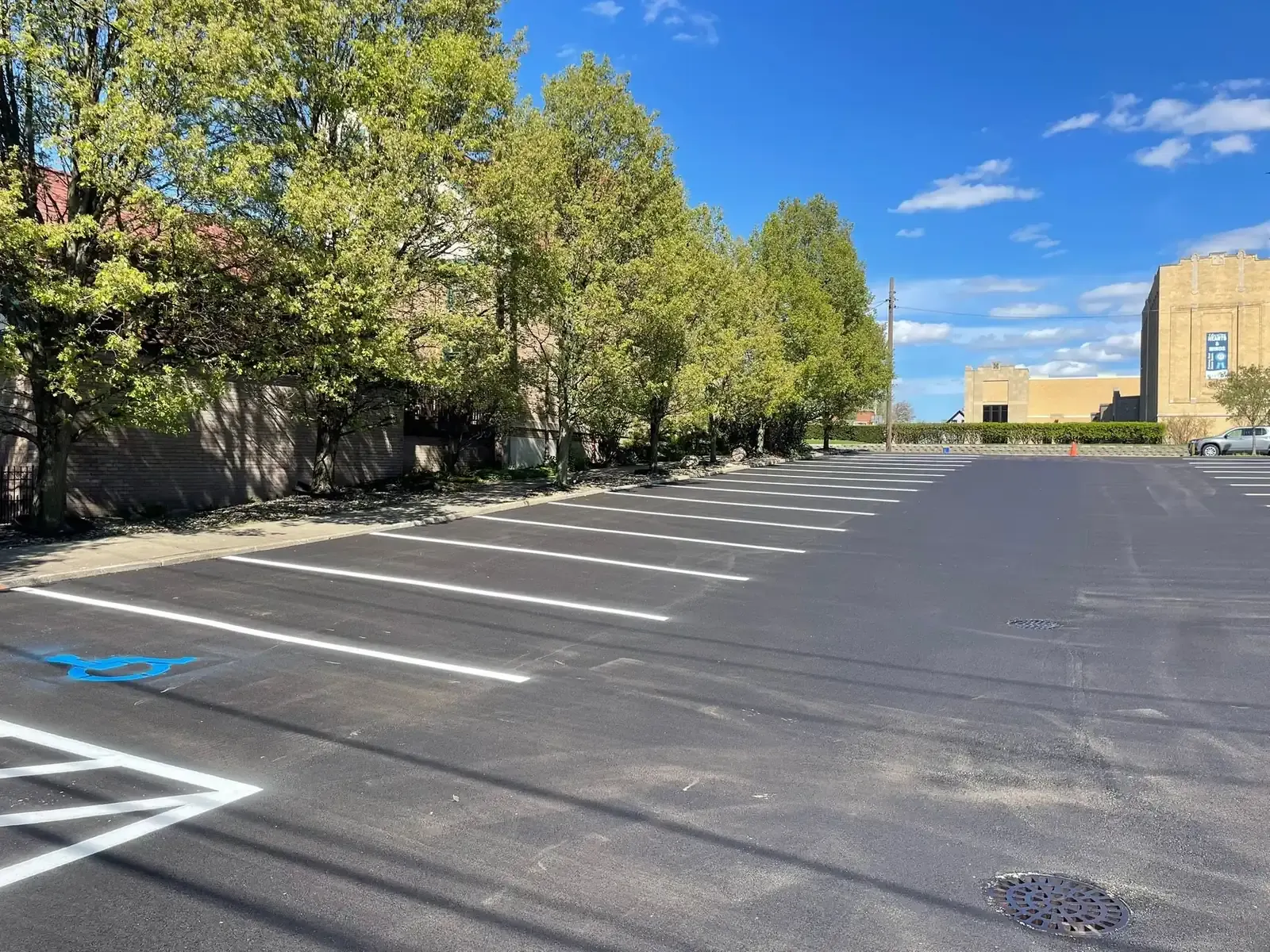
The way to schedule parking lot paving in Elkhart, IN without shutting your business down is to split the lot into phases, keep one entrance and one delivery path open in each phase, and agree ahead of time on when each section can carry traffic. Most of the disruption comes from unclear access, not from the paving itself. A plan you can hand to staff and vendors fixes that.
Map work phases around business hours
Start by walking the lot at your busiest time of day. Note which entrances customers use, where delivery trucks pull in and turn around, and which rows of parking fill first. Those are the spots you protect when the work is laid out.
Then ask whether the job can be done in sections. A lot with two entrances can often be paved half at a time, so one side stays open while the other is milled, paved and cooled. A lot with a single entrance is harder, and you may need to plan for a full closure during off hours, such as a weekend or overnight, if your business allows it.
- Entrances and exits that must stay usable
- Delivery routes and truck turning space
- Accessible parking spaces and the walking paths to your door
- Dumpster pickup areas and loading docks
- Spots where employees park, which can move to the street or a neighboring lot if you arrange it
Confirm the work sequence and access plan
Ask the contractor to walk you through the order of work in plain terms. A typical job runs prep and repairs first, then paving, then a cooling period, then markings. The base (the compacted stone or old pavement under the new surface) gets fixed before any new asphalt goes down, so weak spots do not come back through.
Curing is the part owners underestimate. Fresh asphalt has to cool and firm up before it takes vehicle weight, and heavy trucks and tight turning wheels are the hardest on it. The wait depends on the mix, the thickness and the weather, so get the reopening time for cars and for delivery trucks separately, and ask who will confirm it on the day.
Line striping comes last. If stalls, arrows and accessible spaces need to be back in place before you open to customers, say so up front, because the striping crew has to fit in behind the paving crew. For a lot that is being rebuilt from the ground up, asphalt parking lot installation adds more steps and more days, so the phasing conversation matters even more.
| Phase | What happens | What to settle with the contractor |
|---|---|---|
| Prep and repairs | Cleaning, base fixes, edge work | Which rows are blocked and for how long |
| Paving | New asphalt laid and compacted | Which section goes first and where the open entrance is |
| Cooling | Surface firms up before traffic | Reopening time for cars and for trucks |
| Striping | Stalls, arrows, accessible spaces | Whether it is the same day or a return visit |
Account for Northern Indiana weather
Northern Indiana winters bring snow and freeze-thaw cycles, and November and December can be unpredictable for outdoor paving. Asphalt needs warm enough air and ground to be laid and compacted properly, and that gets harder as nights turn cold. A stretch of rain or a cold snap can push a job back a few days or more.
That is why a late fall paving date should be treated as a target, not a promise. Ask your contractor how they decide whether conditions are suitable, who calls it, and how much notice you will get if the work moves. Then build slack into your own side: a backup day, a note to staff that dates may shift, and a plan for deliveries that does not fall apart if the lot stays closed an extra day.
If your lot drains poorly or has standing water after storms, mention it. Water sitting on a lot through freeze-thaw weather is hard on pavement, and it can change what repairs happen before paving.
Plan for your location and lot
Businesses in Elkhart, South Bend and Goshen run on different rhythms. A lot behind a restaurant has a lunch and dinner rush. A lot at a warehouse has truck arrivals. A lot at an office may be nearly empty on weekends. The right schedule follows your traffic, not a general rule.
If you share a lot with other tenants, bring them into the conversation early. One tenant's closed entrance is another tenant's lost customers, and landlords or property managers often need to approve the plan. Check with your city or property owner about any permits or notices that may apply.
Prepare a schedule your site can use
Before you ask for a schedule, put a few facts on paper. It saves back and forth and gets you a plan that fits.
- List the hours when traffic is heaviest and the days you can close part or all of the lot.
- Mark entrances, delivery paths and any area that cannot be closed at the same time as another.
- Identify the access you must keep open, such as accessible parking or a fire lane.
- Decide who on your team will relay changes to staff, customers and vendors.
- Pick a backup window in case weather moves the first date.
With that sheet in hand, we can lay out phases that fit your hours. Ask for a free estimate, and we will go over the sequence and access plan with you at the same time. We are family-owned and operated, with more than 40 years of experience.
Common questions
How do I schedule commercial parking lot paving without losing customers?
Ask for the work in sections so at least one entrance and a block of parking stay open, and schedule the heaviest closures for your slowest days or hours. Post clear signs and tell regular customers and vendors the dates in advance.
How long before customers can park on a newly paved lot?
It depends on the mix, thickness and weather, so there is no single answer. Ask your contractor for a reopening time for cars and a separate one for heavy delivery trucks, and plan to keep traffic off until they confirm.
Can parking lot paving happen in November or December in Northern Indiana?
Sometimes, when the weather cooperates, but cold, wet or snowy stretches can delay or stop the work. Treat any late fall date as flexible and ask how the contractor decides when conditions are suitable.
Areas we serve
Our services
Have a question about your project? Call (574) 336-3628